Saturday, April 5, 2014

More of Mombasa

Here is a little bit about my time in Mombasa. It's been a week since we've returned from the coast and I've enjoyed being back in Nairobi. We have one last week of classes, and quite a bit of work to do. As classes wrap up we are also preparing to head out on our independent studies, and after that we will only have a few days left in Nairobi before heading back to the States. Time flies when you're having fun in Kenya. 

March 24: Today I woke early to watch the sun rise over the Indian Ocean. While looking out over the water I thought about how at about the same time one year ago I was standing on the beach in Thailand at the opposite side of the Indian Ocean watching the sun set in the evening. Last night when we arrived at the resort all of us immediately went out to the ocean and went on a "water safari" with the local beach boys as the tide was out. We saw countless sea creatures in the pools on our way out: sea worms, urchins, cucumbers, slugs, sponges, and lots of coral (both alive and dead). The beach boys are local men that make their livelihood off of tourists on the beach, selling random souvenirs and giving "water safari" tours of the sea life, asking for compensation at the end. We knew they expected money for showing us around, but didn't pay them, but a few of us bought odds and ends from them. One sells fresh coconuts that we have enjoyed daily by the pool. The beach boys can be obnoxious, pestering you anytime you approach the beach, however some are pretty nice and Cody and I had some interesting conversations with them while waiting for one named Marco Polo to made a straw hat for us.

We are staying at a nice resort on the ocean with less than a minute's walk to the water from my room. The water is pretty shallow and there is quite a bit of vegetation and small animals like sea urchins making it a little difficult to swim in the ocean. However, there is a nice pool that is actually a bathtub, seeing as the water is not very refreshing considering how hot it is in Mombasa. Mombasa is much hotter than Nairobi and much more humid. Even though I'm a little more used to it than everyone else after my semester in Thailand, it is still crazy hot. However, I will have to readjust to this temperature since my IDS is a short distance up the coast and I assume the weather will be similar. 

On Monday we visited the Rabai Kaya Forest. This is a sacred forest to the Mijikenda people of coastal Kenya. There are several Kaya forests, many recognized as important biological conservation areas since there is such high levels of plant diversity within the forests. The Mijikenda people have conserved the forests for their own sacred practices including rituals and burial ground. There are many beliefs shared by the Mijikenda people on how to approach the center of the Kaya Forest. When we were following our guide and two Mijikenda elders on the small path, we had to stop at one point and rest for a few moments to allow the bad spirits to be removed from us before continuing towards the center. Our shoes also had to be removed. 

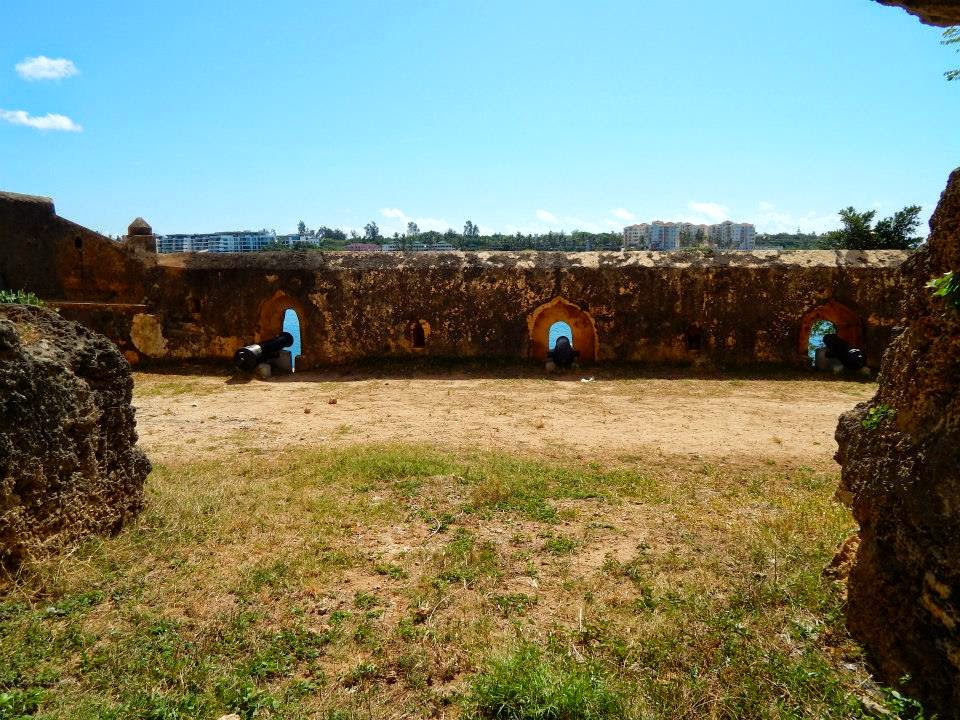
March 25: Today we went into the Old City of Mombasa to tour Fort Jesus. Fort Jesus is a Portuguese port built in 1591. After our tour we split into groups and were brought around Mombasa's old town with a guide. I felt like we were navigating a maze as we followed our guide through the twists and turns of the old town. The streets were very narrow, and often tuk tuks would appear out of no where, wanting to pass. 

Our tour brought us to Biashara (business) street where we were able to do some shopping alongside the locals who were also there shopping for clothes and various fabrics. 


Tristan and me


Mckenzie, Sam, me, Alex and Lacey

Alex and me


March 26 & 27: We spent these two days again in the old town of Mombasa. Each morning we met with locals who we interviewed about different aspects of coastal Kenya, including economics, tourism, and Islam. It was a very interesting conversation both days, and we learned a great deal from the panels we spoke to.

March 28: This morning we had our group presentations for the week. Group presentations are held after each course extension, for instance our last group of presentations was after our stay in Amboseli, with topics covering the Maasai economy, culture and relationship with the environment. My group discussed the relationship between the Kenyan coastal people and the national government. 

After presentations we enjoyed an afternoon relaxing by the pool, playing volleyball, and walking along the beach. In the evening we took the bus to a hotel on the inlet in Mombasa and boarded the Tamarind for a dinner boat cruise. We enjoyed a very fancy night on the water eating and dancing together. It was a four course meal, and I had a mixed seafood appetizer, butternut squash soup, lobster and chocolate cake with Kenyan coffee. The boat held about 40 people and it has impeccable service; I felt like I was not in Kenya anymore. Our group was seated in our own section on the top level, and on the level beneath us there was a band playing different kinds of jazz and Kenyan music. After dinner we all hit the dance floor and we were even able to get both of our program coordinators to dance with us as well. It was a great way to end an amazing two weeks of traveling together. 


Cody and me

the boat!

Sean, McKenzie M., McKenzie S., Lourine, our waiter, Cody and me

main course


the band


Tuesday, April 1, 2014

Cultural Manyatta

Here are some photos from the cultural manyatta that we visited in Amboseli two weeks ago. We spent the afternoon visiting with the Maasai people living there, learning about their traditional herbal medicines and speaking with a group of Maasai women. (Beau says hi!) There was an amazing rainbow in the distance as we sat and spoke with the women, asking them questions about their lifestyle and how they benefit from tourism in the area.


interviewing the Maasai women


Monday, March 31, 2014

Photos From Amboseli

I am still without a camera for a couple reasons. First of all, it's too expensive to fix my camera and I'm being stubborn. But second and most importantly, I have thoroughly enjoyed being without a camera. Instead of seeing something beautiful and watching through the viewfinder of a camera, I've been able to observe each and every moment with my own eyes. I think that this has allowed me to experience moments in a whole new way. Occasionally I miss being able to take my own photos, but someone wise once told me that "there are some moments you just can't capture." So far my time in Kenya, and Amboseli National Park especially, has been a series of unforgettable moments in which a camera does absolutely no justice.

However; enjoy these photos because I'm lucky to be with a group of some great photographers that have done a great job of representing our experiences here so far.

Sam, me and Alex

Lacy and me in the safari car

Grey crowned crane


herd of elephants walking towards Kilimanjaro


African fish eagle

Saddle-billed stork
Goliath heron 

Giraffe sighting outside of the National Park near our resort


View of Kilimanjaro from our resort


Ostrich


 Secretary Bird
Cody, Sean, Connor and me


 one handsome baboon
Our first sight of elephants in Amboseli was in the beginning of our game drive and 
there were about 50 total...amazing!


Thursday, March 27, 2014

Mambo Mombasa

Greetings from Mombasa! I am currently enjoying a week on the Kenyan coast in the outskirts of the coast's largest city. We will be in Mombasa from March 23-29, studying the culture and environment of the East African Coast. The coast has a large population of Muslims and the different historical factors have shaped the coastal society in many ways. We will be visiting the Kaya Rabai Ecotourism Project, Fort Jesus, Mombasa's old town, as well as several museums. This is kind of a working spring break (at least it's two weeks long if we have to do readings/discussions/group presentations while we are here). Experiential learning is really growing on me. It's pretty amazing to be fully immersed in the culture we are learning about day to day. After Mombasa we will return to Nairobi for two weeks of classes before departing on our independent studies (IDS). 

We spent March 17-23 in Amboseli National Park, staying at a beautiful "glamping" (glamour camping) resort. It was an outdoor resort with an amazing view of Mt. Kilimanjaro in the distance. We all stayed in permanent tented buildings, with a metal roof thatched with grass, and a canvas tent hanging underneath. We had 4-post beds and hot water. It was the complete opposite of roughing it. There was also a pool at the resort that we took full advantage of whenever we had free time. 

One day we visited farmers in the countryside and with the help of translators we interviewed several farmers, asking them various questions about different challenges they face on their farms such as land shortage, water access, and wildlife damage to their crops. In the afternoon we visited a cultural manyatta, which is a group of Maasai traditional-style homes where tourists can visit to learn about their culture and traditions. The cultural manyatta is kind of strange, since it is a false representation of modern Maasai life and is fabricated to appeal to foreigners. However touristy this was, we were also able to interview the Maasai people living there to ask them about how their community benefits from tourism and the challenges that exist with distributing and spending the profits among other questions. 

The next day we visited Amboseli National Park, spending the entire day on a game drive in. We traveled in Safari cars with open tops that we could stand and look out of to admire the wildlife. While I made a long list of the many different species of animals we saw, some of the most memorable were the elephant, cheetah, hippo, Cape buffalo, wildebeest, Goliath heron, and saddle-billed heron. I'm currently posting from my iPhone so I don't have many good shots but I will post more photos when I'm back to a computer. 

On Thursday afternoon we embarked on our 24-hour stay with a Maasai family. In groups of two we were dropped off in the middle of nowhere (I now know the full meaning of this term). The home we stayed at, called a boma, had 3 different structures, one made of mud, dung and sticks, and two made of sheet metal. My host parents slept separately in each of the two metal homes and the children slept in the traditional mud hut, my home for the night. My family included my host parents as well as Ntidai, an adorable 5 year old girl, another sister 14 years old (I never learned her name) and Dan, our 18 year old brother. Many Maasai practice polygamy, and my host father, Musa, had 20 children in all; 7 with my host mother, Joyce, and 6 and 7 with two other wives. At our boma he had about 100 cows and 50 sheep, but also kept livestock at his other homes; he was a wealthy man in the community. Although he only had one leg, he had lost the other from the knee down as the result of an infection, he still went out on crutches in the afternoon to heard his livestock back into their pens after a day of grazing. Musa didn't associate much with the females in his family, the women are responsible for the household duties like cooking, cleaning and milking the cows while Musa spent the day relaxing underneath an Acacia tree and herding in the afternoon. We only had one conversation with him during our stay, but were able to ask him questions about the Maasai community and his relationship with Amboseli. Amboseli National Park is not fenced, and the wildlife often leave the park and cause damage to crops in farms nearby the park. Many Maasai appreciate the wildlife and recognize the benefits that tourism have brought to the region, yet are constantly forced to deal with challenges brought about by the wildlife. Kenya Wildlife Service (KWS)  employs rangers to patrol the region to help farmers keep wildlife from damaging their crops, but this isn't entirely effective and in our interviews with farmers we learned that on average about 40% of crops are lost to wildlife damage. Many farmers hoped to be compensated for their losses and for increased assistance from the park rangers to deal with this issue. 

Other activities we did during our stay included fetching water, collecting firewood, repairing the walls of the hut, and herding. To fetch water we walked about 5 minutes to a nearby water source, which we never quite understood where the water came from, but my professor says that it's a government-owned pipeline carrying water from Mt. Kilimanjaro to Nairobi that is broken into by the locals. Either way, the community has access to clean (but untreated) water, whether it is legally obtained or not I do not know. We carried the water in 7 liter jugs, with a leather strap around our foreheads and the jug resting on our lower backs. It was a little uncomfortable at first, but it seemed like a good method for carrying water a long distance rather than carrying it by hand. We collected firewood from a nearby tree, breaking off the dead limbs and carrying them back home in similar style to the water. To repair the home, we took the freshest cow dung from the pen and smeared it on the hut with our bare hands. At first I was skeptical to pick up the pile from the pen, but once I got to smearing it on the house, I forgot about what I was doing and enjoyed mending the cracks on the house. Apparently I had good technique says our translator. During the afternoon we were able to help herd the sheep back home. 

For dinner we ate rice mixed with potatoes. The plate I was served looked like enough to feed 6 people, and I really don't think I'm exaggerating. We had a cup of warm milk after dinner, fresh from the cows that were milked earlier in the afternoon. We slept on a small bed on top of a cow hide laid upon a bed made of sticks. I slept much better than I imagined I would; it cooled down at night which I think helped limit the amount of flys that were in the home. During the day the flys are swarming all over you, at any time you might have 20 or so around you, often landing on your face. 

In the morning we attempted to help make pancakes (a much much greasier version of American pancakes) but the fire inside the house produced so much smoke that we could only tolerate being inside for 5 minute intervals, taking breaks outside in the fresh air. We helped with some chores before joining our host mother and translator underneath the shade of a large Acacia to make some jewelry. We learned how to make some traditional Maasai bracelets, stringing hundreds of tiny beads in a variety of colors onto metal wire. 

The 24 hours with our family went by quickly, and it would have been nice to spend more time with them. They definitely live a very simple and happy lifestyle. A reoccurring theme throughout my time here in Kenya has been opposite extremes. Often we shift quickly from one lifestyle to another, and often there are drastic changes. Leaving the Maasai and returning to our upscale safari lodge was a strange experience, similar to my experience leaving the hunter-gathering Hazda in Tanzania and returning to Nairobi.